By Brooke Stanton
At the Arlington piercing studio where we take our girls, a 16-year-old cannot have her ears pierced unless a parent or guardian is in the room with a government photo ID. That is the rule for an earlobe. On November 3, Question 1 will ask Virginia voters to add a “fundamental right to reproductive freedom” into the state constitution’s Bill of Rights for every “individual,” with no age limit, and to forbid the state from penalizing anyone who aids or assists in an abortion, so long as that individual “voluntarily consents.” The daughter whose ear cannot be pierced without a parent could, under the amendment, have an abortion without one.
Virginia already permits abortion — the intentional killing of unborn children — through the second trimester. Question 1 would constitutionalize and expand this grave injustice, stripping away the remaining restraints.
Even if no second human being were involved, abortion procedures would still be more serious than anything else Virginia lets a minor decide alone. Surgical and chemical abortion are invasive. Mifepristone carries a black-box warning for serious and sometimes fatal infection and bleeding. A 2025 Ethics and Public Policy Center analysis of insurance claims for 865,727 mifepristone abortions found that 10.93 percent of women had a serious adverse event within 45 days (at least 22 times the figure on the label).
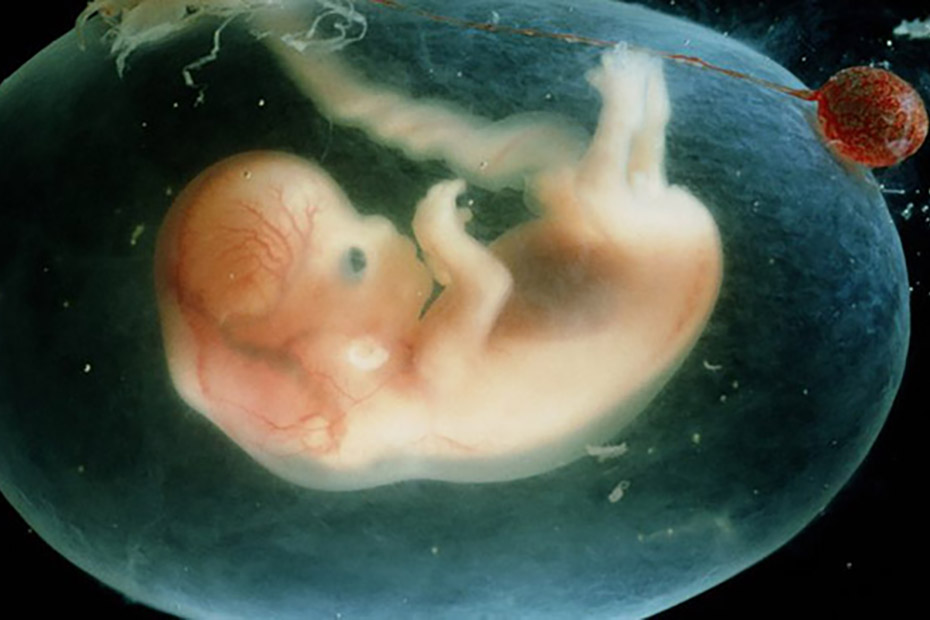
But in fact, there is a second human being involved. Fertilization — not birth — is the leap from two mere cells to a new, whole, individual, and living human organism. The Carnegie Stages of Human Embryonic Development — the global standard of human embryological research, instituted by the National Museum of Health and Medicine’s Human Developmental Anatomy Center — codify fertilization as Stage 1, the start of a new human life.
After fertilization, the new human being does not become a different kind of thing. He or she continues to grow and develop as the same human organism during the embryonic period, the fetal period, and then, after birth, throughout the subsequent stages of human development. Fertilization is when a human life starts and personhood begins. Assigning relative value at any later point is arbitrary and scientifically invalid.
This portion of this article has been reprinted with permission. To read the remainder of this article, visit the National Review site at nationalreview.com/2026/10/the-ear-lobe-and-the-unborn-child.