
By Father Shenan J. Boquet
Something unexpected, but welcome, is happening on the topic of euthanasia and assisted suicide.
Late last week, the French Senate rejected a government-backed bill that would have legalized “medical assistance in dying” (i.e., assisted suicide and euthanasia), sending the legislation back to the lower house of Parliament.
The vote came as a surprise. The bill had passed easily in the lower legislature. And many had expected that it would sail through the upper house.
While the situation in France is highly complex, there are indications that this rejection of the bill isn’t just a procedural hiccup. In part, it provides further evidence of a broader resistance emerging in Western democracies to what many viewed as simply the next logical step in the advance of so-called “progressive” values.
Across Europe, legislative efforts that had appeared almost certain to pass — in Scotland, England and Wales, and elsewhere — are now encountering unexpected obstacles, delays, ferocious debate in legislatures, and growing public unease.
In some significant measure, this shift is because the horrific, real-world consequences of legalized euthanasia and assisted suicide are surfacing with increasing frequency in the media.
Legislators are increasingly hesitant to pass laws that, as experience is repeatedly showing, are almost certain to be abused by unscrupulous healthcare workers and caregivers, resulting in the kinds of grotesque violations of human dignity and rights that are making headlines in places like Canada and the Netherlands.
Meanwhile, more legislators and citizens seem to be recognizing euthanasia activists are basing their efforts upon a false dichotomy: either we must accept painful, undignified illnesses and deaths, or we must legalize physician-assisted suicide and euthanasia.
In reality, there is a too-often unacknowledged third path: prioritize excellent-quality palliative care that respects the sacredness of human life, thus providing the sick and dying with truly dignified deaths, rather than suicide dressed upon the unconvincing guise of compassionate healthcare.
France’s Senate Vote: A Pause, Not a Victory
On January 28, the upper house of the French Parliament voted 181 to 122 to reject a law that would have allowed voluntary assisted dying for adults with serious and incurable conditions under certain conditions.
The story behind the rejection isn’t straight forward. Some of the members of the upper house voted against the bill because they argued that it didn’t go far enough. They argued that Senate amendments had made the bill too restrictive, and so they sent it back to the lower legislature in hopes of liberalizing the law.
However, a sizable number of other critics argued that the bill was both dangerous and unnecessary. They argued that the focus should be on expanding access to palliative care and compassionate support, not normalizing death as a solution to suffering.
Adding weight to this interpretation is the fact that immediately after rejecting the euthanasia and assisted suicide bill, the upper house overwhelming passed a bill promoting greater access to quality palliative care.
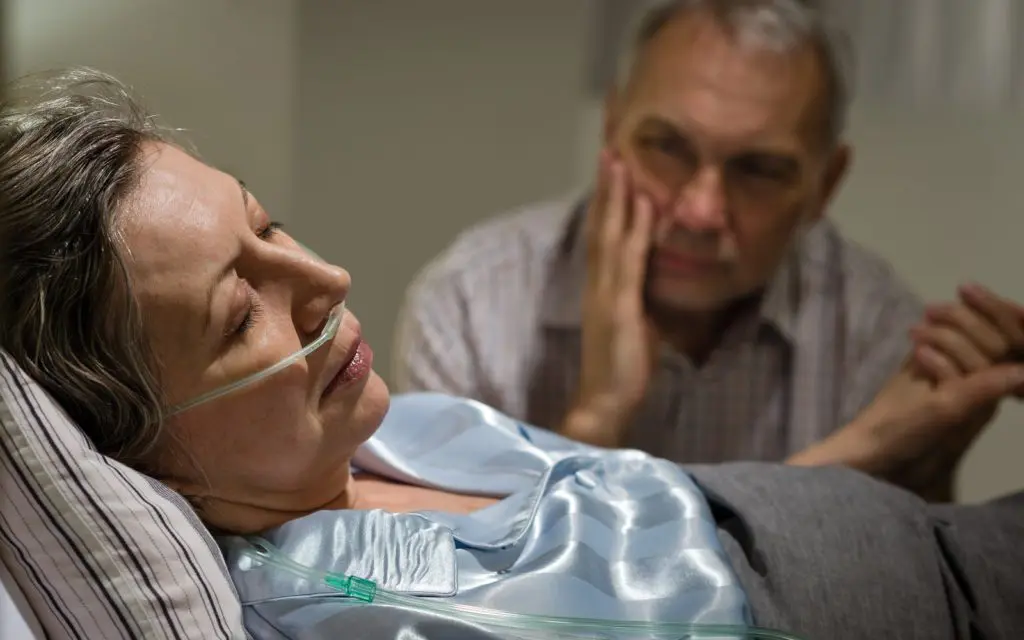
Ludovine de La Rochère, president of French pro-life organisation The Family Union, welcomed the rejection of the bill.
“By refusing to consider euthanasia and assisted suicide as the appropriate response to the end of life, the senators have opened up another way out of the impasse,” she said. “Society does not expect us to organise death, but to offer everyone appropriate care until the end. The real progress today is to guarantee everyone access to palliative care, support and relief from suffering, not to pave the way for the acceptance of lethal action.”
Unfortunately, the French debate is not over. The bill’s supporters intend to return it to the lower house for another vote. The pro-life Jérôme Lejeune Foundation is warning that if French citizens don’t make clear their opposition to the bill, the rejection by the Senate could in fact make things worse in the long term.
“This rejection has an immediate consequence: the bill initially adopted in the spring of 2025 by the National Assembly – the most permissive in the world in terms of euthanasia – will return for a second reading. The threat therefore remains, and it is a major one,” said the Lejeune Foundation.
Nevertheless, France’s bishops say they are heartened by the recent vote. “This rejection appears to be a sign of major political and societal deadlock and highlights the seriousness of the ethical issues at stake,” they wrote in a statement immediately following the Jan. 28 vote.
“No Hope” of UK Assisted Suicide Bill Passing
France is not alone in putting on the brakes.
According to a recent analysis from The Pillar, legislation on euthanasia and assisted suicide in Scotland, England and Wales, and elsewhere is hitting rough waters in early 2026.
Bills that once moved smoothly through initial readings are stalling, losing momentum, or encountering resistance from lawmakers concerned about safeguards, coercion, and unintended consequences.
In England and Wales, a private members’ bill that had progressed in Parliament is now slowed by amendments and delays in House of Lords, raising questions about its ability to become law in the current legislative session.
One of the leading advocates of legalizing euthanasia and assisted suicide, Lord Falconer, told the BBC recently that it is “very, very difficult” to see how the bill could pass this legislative session.
The assisted suicide bill has stalled in the UK House of Lords in large measure because many of the Lords have introduced amendments that would significantly curtail the scope of the bill.
As summarized by the BBC, among the amendments are those:
- Explicitly removing pregnant women from eligibility for an assisted death
- Restricting assisted deaths to cases where a person’s suffering cannot be relieved by treatment
- Changes to how a person’s capacity to request an assisted death is assessed
- Requiring background checks on close relatives of those requesting an assisted death
- Lifting the minimum age to 25
- Doubling the period of reflection between assessments
UK pro-life campaigners have taken heart from the French Senate’s rejection of the bill, urging the British Lords to follow suit.
“It is all too clear that once assisted suicide or euthanasia is legalised, the attitude of society towards its most vulnerable members changes significantly for the worse,” said Catherine Robinson, a spokesperson for Right To Life UK. “The Senate’s rejection of the eligibility clause reflects growing concern about the risks of pressure, coercion and the erosion of protections for society’s most vulnerable people.”
She added, “Those in the House of Lords should take inspiration from this example set by the French Senate – that irreconcilable differences on assisted suicide and euthanasia mean that the legislation should be rejected, rather than passing a flawed and unworkable version of the legislation.”
French Bishops: Assisted Suicide Is Not Compassionate
France’s Catholic bishops were among those leading the charge against the assisted suicide bill, urging legislators to take a positive, holistic, life-affirming approach to difficult end-of-life issues.
In a powerful, philosophically rich, and lengthy statement before the vote, the bishops urged legislators to reject the bill, pointing out that Catholic opposition to euthanasia and assisted suicide is grounded not in opposition to the advance of some new freedom, but rather in profound humanistic concerns aimed at protecting authentic autonomy and freedom.
“The Church has a long history of accompanying the sick and disabled, caregivers, healthcare professionals, and chaplains in hospitals and nursing homes, and we hear the anguish of those who dread pain, loneliness, or loss of control,” stated the bishops.
From the vantage point of this centuries-long experience of caring for the most vulnerable, they warned:
Legalizing euthanasia or assisted suicide would profoundly alter the nature of our social contract. Behind reassuring words lies a reality that language tends to conceal. Presenting euthanasia and assisted suicide as acts of care seriously blurs ethical boundaries. Words are twisted from their true meaning to better numb consciences: this obfuscation is never neutral. One does not care for life by giving death.
The bishops noted that when a person asks to die, it is in some measure because their life “no longer conforms to socially normalized criteria: being healthy, useful, able-bodied, and not representing a significant financial burden.” A decision to be killed or to commit suicide in these cases, they noted, is not an authentic expression of freedom.
“Freedom conceived in this way risks becoming a silent pressure, especially for the most vulnerable,” they argued. “The freedom of every individual must also be considered in its relational dimension: we are interdependent, and the choices of some affect others. To place the burden of choosing death on a sick person, a family, or a medical team trained to heal and not to kill, is to deny the mystery of communion that binds us together.”
The bishops noted that their opposition to the legislation does not arise from purely religious considerations.
We want to give voice to the profound concern expressed by many sick people, people with disabilities, their families, and caregivers. With this proposed law, caregivers would once again be on the front lines and forced to perform actions contrary to the ethics of care and the bond of trust that unites them with patients and their families or loved ones. There is a significant risk of undermining the relationship of trust between caregivers, patients, and their close circle.
Abuses and Harms: When Assisted Death Becomes Dangerously Accessible
One of the clearest signs that the tide may be turning is the growing number of abuse reports emerging from jurisdictions that have legalized medical assistance in dying (MAiD).
I have written about many of these in recent weeks and won’t repeat them here. However, one story that recently emerged highlights just how harrowing things can become once euthanasia is legalized.
A January 2026 report from Ontario tells the story of an elderly woman who was euthanized within hours — even after she changed her mind and expressed a wish to live. Physicians involved deemed the case “urgent” despite conflicting assessments, and the woman was killed the same day.
Such cases are not isolated.
Across several countries with legalized euthanasia and assisted suicide, advocates and watchdogs have documented situations in which patients withdraw their consent but are still euthanized due to procedural shortcuts, caregiver exhaustion is treated as justification for MAiD rather than an indication of care deficiencies, and vague or broad eligibility criteria leave room for subjective assessments of “unbearable suffering” that can be influenced by societal, economic, or familial pressures.
Paradoxically, many progressive activists who are staunchly against the use of the death penalty, in part because it can lead to the execution of those who are falsely accused, seem strangely blasé about the innumerable ways MAiD can be abused, leading to the deaths of those who do not, in fact, wish to die.
MAiD Is Not Inevitable
At times, it can be tempting to believe the further expansion of the culture of death is simply inevitable.
After all abortion, no-fault divorce, and the contraceptive mentality have swept the world, and show no signs of retreat. Even once staunchly pro-life nations like Ireland have fallen in recent years, and pro-abortion activists are making inroads in Latin America.
However, the past few years have held a number of positive surprises.
Just when it seemed that gender ideology was about to take over every political, cultural and educational institution, a sudden, strong backlash to gender ideology began. Numerous jurisdictions are beginning to restrict so-called transgender “treatments” for youth, and many public figures, many of whom are otherwise quite liberal, are expressing their misgivings about gender ideology with a renewed sense of freedom.
On the topic of pornography, more and more jurisdictions are looking at, or have already put in place, meaningful measures to protect the youth, and there is a growing awareness of the negative psychological impacts of consuming pornographic material.
And then, as we are discussing here, there is the push towards what seemed like the “logical next step” towards the total victory of the culture of death – euthanasia and assisted suicide. And here, too, we are finding a newfound concern about the perverse logic and consequences of pursuing death as a solution. The wisdom of the Church’s steadfast opposition to these practices is suddenly finding a hearing in legislatures and newspapers.
For Catholics committed to orthodox moral teaching, these developments are both a cause for cautious hope and a call to deeper engagement.
In a culture grappling with questions of suffering, autonomy, and dignity, Catholics must continue to be voices for life, sharing the richness of Catholic teachings far and wide. If the tide is indeed turning, it is because these truths resonate with our deepest human instincts: to protect the weak, to accompany the suffering, and to honor the dignity of every person from the first breath to the natural end ordained by God.
This article has been reprinted with permission and can be found at hli.org/2026/02/true-end-of-life-care-respecting-the-sacredness-of-human-life.