By Judie Brown
There has been an ongoing debate about when a person is really, truly dead for as long as I have been involved in defending life. This is so for a panoply of reasons, best summed up by Professor Robert Spaemann, who wrote, “Scrutinizing the existence of the symptoms of death as perceived by common sense, science no longer presupposes the ‘normal’ understanding of life and death. It in fact invalidates normal human perception by declaring human beings dead who are still perceived as living.”
Those words were written nearly 20 years ago, but as we realize today, the threat of prematurely killing patients who are defined as brain dead is not only still practiced but increasing.
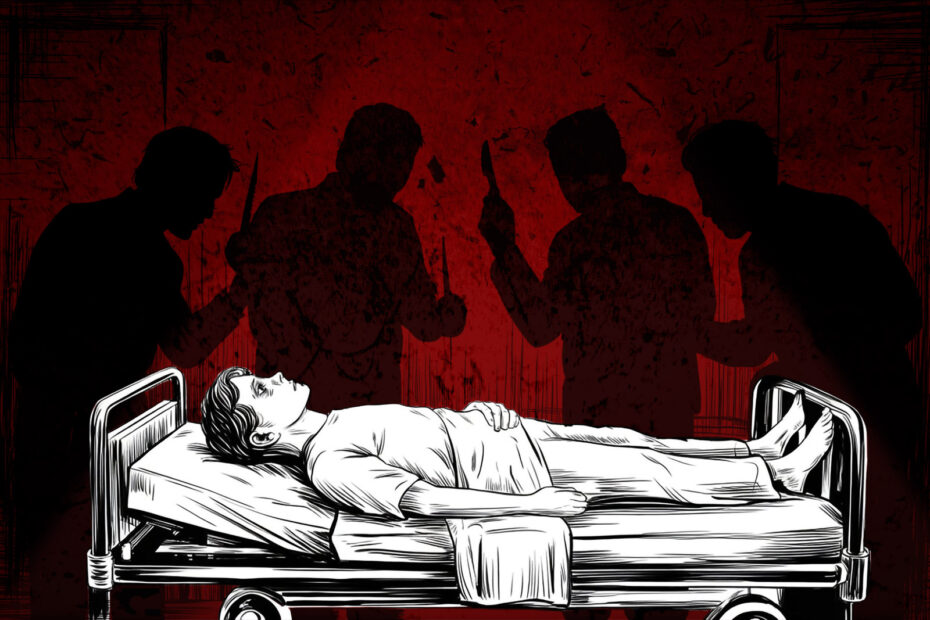
This is so for many reasons, the most prominent being organ harvesting from patients who are still alive but who are deemed dead enough to take one of their organs. Dr. Joseph Eble writes, “It is clear that a substantial number of ‘dead’ donors are alive at the time of organ harvesting. Some patients could even potentially be conscious and feel the pain of being cut open if anesthesia were not used during organ harvesting.”
Robert F. Kennedy Jr., the Secretary of Health and Human Services, conducted investigations into this matter and determined that specific reforms must be put in place. In a media release Kennedy stated, “Our findings show that hospitals allowed the organ procurement process to begin when patients showed signs of life, and this is horrifying. . . . The organ procurement organizations that coordinate access to transplants will be held accountable. The entire system must be fixed to ensure that every potential donor’s life is treated with the sanctity it deserves.”
We are grateful to Secretary Kennedy for making this a priority, but at the same time we are saddened by the fact that modern medicine has so abused the concept of brain death that only God knows how many people have already been prematurely killed because their organs were harvested while they were alive.
Exposing the complexity of this macabre medical practice has been part of American Life League’s mission ever since our founding. The reason for our effort is crystal clear. Saint John Paul II reminded us that there are certain limits beyond which man cannot go. He taught, “These limits are expressly imposed because of the reverence due to the whole human organism and its natural functions, in the light of the principles we stated earlier, and in accordance with a correct understanding of the ‘principle of totality’ enunciated by our predecessor Pope Pius XII.”
Put into simple terms, this means that body “parts” (i.e., organs, digits, etc.) may be severed, removed, or otherwise debilitated if, by so doing, it benefits the person. But this also means that, when it results in actual death, no one may take vital organs or other body parts from one person to benefit someone else.
The argument that a patient is dead rings hollow when we take these principles into consideration. After all, the only reason a living patient is needed for organ donation is that once the heart stops and the blood ceases to flow, the organs of that person are no longer useful. Think about that for a moment.
Doctor Heidi Klessig coauthored a book on this subject. In Harvesting Organs & Cherishing Life, she and registered nurse Christopher Bogosh explain the problematic nature of organ donation, including the use of a registered organ donor card. In a Celebrate Life Magazine interview, Dr. Klessig explained, “Only a living person can donate organs such as the heart, lungs, liver, or kidneys. Brain-dead donors and DCD [donation after cardiac death] donors are still biologically alive when their organs are harvested. Unless a compassionate anesthetist gives some anesthetic drugs ‘just in case,’ registered organ donors may be aware of what is happening.”
A chilling thought and yet another reason why the argument that alive is dead is pure evil.